A few months ago, I announced my resignation from EiS Technologies ("A Crazy Game Of Poker"). Another one of those leaps of faith - agreeing to part months ahead of time, not quite knowing where I was going next. It's a great approach to parting ways with an employer if all parties can step up to behaving like grown-ups. It gives the employer time to find and train a replacement as well as picking your brain for knowledge transfer, and it gives the employee time to search for the next gig without facing huge financial pressures. It works well as long as all parties are mature enough to refrain from any vindictive behavior.
Big kudos to the leadership at EiS for stepping up through this time period and making it all work well. EiS is a special place with a special team...I miss every bit of it.
I started a new adventure with Io Consulting in February. I like the social value of the company's mission: 100% Oracle, 100% Higher Education, 100% Customer Satisfaction. Each and every one of those elements are important to me. My role will be building up Fusion Middleware and Oracle Cloud Applications Services capabilities within the company. So I'll continue to be deeply involved in User Experience, ADF, and the overall Fusion/Cloud Applications architecture. I'll likely get into some PeopleSoft & Campus Solutions areas as well...it's been awhile since I've been intimately involved in either, so it'll be nice to get back there again. So I'm very excited to join the Io Consulting team and look forward to what lies ahead.
In some ways, it will be weird: no more Collaborate or KScope, a little less emphasis on EBS, a more narrowly focused customer set. But I'll get to attend Alliance on a regular basis (rather than the sporadic attendance of the last five years) and I'll still be a regular at OOW. And the new management team uses the word "cool" on a regular basis, so that's a good indicator. And I get to work with Ted Simpson - it gets no better than that!
OK, I'm done being self-centered now. The next post will take us back to our regularly scheduled programming.
Showing posts with label #Eistech. Show all posts
Showing posts with label #Eistech. Show all posts
Friday, March 07, 2014


Tuesday, November 26, 2013
Crazy Game Of Poker
Who's up for game two
What to do
My wallet's gettin thin
And I just lost my watch last night
Well I gotta problem
Just one answer
Gotta throw it all down
And kiss it goodbye
Yeah!
What to do
My wallet's gettin thin
And I just lost my watch last night
Well I gotta problem
Just one answer
Gotta throw it all down
And kiss it goodbye
Yeah!
That was a crazy game of poker
(That was a crazy game of poker)
I lost it all
(I lost it all)
But someday I'll be back again
And I, never to fold.
(Never to fold)
(That was a crazy game of poker)
I lost it all
(I lost it all)
But someday I'll be back again
And I, never to fold.
(Never to fold)
- From O.A.R.’s “That Was A Crazy Game Of Poker”
I try not to be too self-centered here, because I’m pretty convinced you don’t want to read that kind of tripe. But it’s been a crazy game of poker for the past few days, so I thought I’d share a little bit on here.
First - LinkedIn Went Crazy
I was touching up my LinkedIn profile over the weekend and changed the title of my current job from “Executive Vice President” to “EVP” (more on that in a second). LinkedIn interpreted that as a new job and the congrats have been pouring in since. Digging all the good will, but nothing really happened.
Second - Accolades From Forbes
Earlier this week, Forbes designated my humble Twitter feed as one all Oracle users should read. Wow. I’m honored, especially when I look at the other folks on the list. Grateful to be included as part of that crowd. Pretty doggone cool. So, if Forbes has enticed your interest, it’s twitter.com/fteter.
Third - I Resigned From EiS Technologies
Yup, I resigned from my current job at EiS Technologies effective December 31. Now you know why I was tweaking my LinkedIn profile over the weekend ;) And I don't even know here I'm going next. Now why would I do a dumb thing like that?

Thursday, November 07, 2013
Changes In Attitude
It's these changes in attitude, changes in latitude
Nothing remains quite the same
For all of our running and all of our cunning
If we didn't laugh, we would all go insane
- From Jimmy Buffett's "Changes In Attitude, Changes In Latitude"
So early yesterday, Oracle announced the impending demise of their commercial version of Glassfish. The intent is to focus on one commercial server - WebLogic. On the plus side, it's good to see the focus. On the negative side, WebLogic is too heavyweight for my desktop development environment. And building on open source Glassfish to deploy on commercial WebLogic introduces new risks that I'm unwilling to accept.
With all that in mind, I decided to spend part of my day yesterday building up a new Oracle Linux VM (VMware, not Virtual Box - I just like the UX better on VMware) and installing WebLogic 12.1.2. Maybe I can figure a way to make this all work. Besides, it's been awhile since I did this, and it sounded fun to my inner geek.
So. I quickly brought up an Oracle Linux 64-bit 6.4 VM. Not a big thing. Downloaded the generic installer for WebLogic 12.1.2. Logged in as root. Edited my hosts file. Installed JDK 1.7.0_45. Created an Oracle install group ("oinstall") and added a user to the group with a password of "oracle". Created my directory for Oracle middleware, changed ownership for the directory and modified the ownership profile. Setup my $MW_HOME, $JAVA_HOME, and $PATH. We're looking good.
Log out. Restart system. Log in as "oracle" user. Start up the configuration and install for WebLogic. Wait? What's this? Oh yeah, I have to change the bash profile to default to 256 colors or the Oracle Universal Installer won't run. Not a big deal, but ironic that I need to modify Oracle Linux in order to run the Oracle Installer for Oracle WebLogic.
And that's when it hits me. My inner geek has taken me down a path that's a real pain in the backside. A smarter person would not modify the bash profile. Nor would a smarter person setup a $MW_HOME, $JAVA_HOME, and $PATH. A smarter person would not have set up the Oracle Linux VM. In fact, a smarter person would not get wrapped around the axle about the concerns over Glassfish versus WebLogic. Nope, not at all. A smarter person would not burn their precious calories in this way at all.
I had to laugh. A smarter person would simply run their development environment in the cloud - WebLogic as a Service - and let somebody else worry about all the underlying infrastructure. Time for a change in attitude.
Where I live, winter is coming. Wonder if I need a change in latitude to support my change in attitude? Hmmm....
Nothing remains quite the same
For all of our running and all of our cunning
If we didn't laugh, we would all go insane
- From Jimmy Buffett's "Changes In Attitude, Changes In Latitude"
So early yesterday, Oracle announced the impending demise of their commercial version of Glassfish. The intent is to focus on one commercial server - WebLogic. On the plus side, it's good to see the focus. On the negative side, WebLogic is too heavyweight for my desktop development environment. And building on open source Glassfish to deploy on commercial WebLogic introduces new risks that I'm unwilling to accept.
With all that in mind, I decided to spend part of my day yesterday building up a new Oracle Linux VM (VMware, not Virtual Box - I just like the UX better on VMware) and installing WebLogic 12.1.2. Maybe I can figure a way to make this all work. Besides, it's been awhile since I did this, and it sounded fun to my inner geek.
So. I quickly brought up an Oracle Linux 64-bit 6.4 VM. Not a big thing. Downloaded the generic installer for WebLogic 12.1.2. Logged in as root. Edited my hosts file. Installed JDK 1.7.0_45. Created an Oracle install group ("oinstall") and added a user to the group with a password of "oracle". Created my directory for Oracle middleware, changed ownership for the directory and modified the ownership profile. Setup my $MW_HOME, $JAVA_HOME, and $PATH. We're looking good.
Log out. Restart system. Log in as "oracle" user. Start up the configuration and install for WebLogic. Wait? What's this? Oh yeah, I have to change the bash profile to default to 256 colors or the Oracle Universal Installer won't run. Not a big deal, but ironic that I need to modify Oracle Linux in order to run the Oracle Installer for Oracle WebLogic.
And that's when it hits me. My inner geek has taken me down a path that's a real pain in the backside. A smarter person would not modify the bash profile. Nor would a smarter person setup a $MW_HOME, $JAVA_HOME, and $PATH. A smarter person would not have set up the Oracle Linux VM. In fact, a smarter person would not get wrapped around the axle about the concerns over Glassfish versus WebLogic. Nope, not at all. A smarter person would not burn their precious calories in this way at all.
I had to laugh. A smarter person would simply run their development environment in the cloud - WebLogic as a Service - and let somebody else worry about all the underlying infrastructure. Time for a change in attitude.
Where I live, winter is coming. Wonder if I need a change in latitude to support my change in attitude? Hmmm....
Tuesday, October 22, 2013
The Impact of SaaS - The Times They Are A-Changin'
Come gather 'round people
Wherever you roam
And admit that the waters
Around you have grown
And accept it that soon
You'll be drenched to the bone
If your time to you
Is worth savin'
Then you better start swimmin'
Or you'll sink like a stone
For the times they are a-changin'.
-Fron Bob Dylan's "The Times They Are A-Changin'
It was my good fortune to have telecons last week with three different Fortune 500 CIOs. Big companies. You would know them if I named them, although I won't do so out of respect for their privacy. One from brick-and-mortar retail, one from engineering services, and one from health care. A few observations from those conversations:
Now I've heard this spiel before. So have you. Nothing new. What struck me was that, in three unrelated encounters, CIOs of major customers were willing to sacrifice the unique elements of their business processes as well as privacy and security considerations in order to cut in-house IT costs. And they saw SaaS as the most expedient path to cutting those costs.
I suspect we'll see more and more Enterprise Application customers moving to SaaS as they begin to recognize the short-term cost savings. And, as John Maynard Keynes pointed out, "in the long run, we're all dead." A bit of a dark perspective, but nevertheless true. It's the short-run that matters these days.
One other thing: all three of these CIOs had also figured out that they had squeezed about all the benefits they possibly could out of automating their business operations - they'd reached the point of diminishing returns. Each of them thought (and I tend to agree) that the big benefits remaining to be realized rested with getting information out of their data. They're anticipating that moving to SaaS will free up more of their operating budgets to focus on delivering that information.
The times, they are a-changin'.
Wherever you roam
And admit that the waters
Around you have grown
And accept it that soon
You'll be drenched to the bone
If your time to you
Is worth savin'
Then you better start swimmin'
Or you'll sink like a stone
For the times they are a-changin'.
-Fron Bob Dylan's "The Times They Are A-Changin'
It was my good fortune to have telecons last week with three different Fortune 500 CIOs. Big companies. You would know them if I named them, although I won't do so out of respect for their privacy. One from brick-and-mortar retail, one from engineering services, and one from health care. A few observations from those conversations:
- Each of those CIOs sought advice on one particular idea: driving down the cost of in-house IT by moving from on-premise packaged Enterprise Applications to cloud applications, signing up for a SaaS model.
- All three of those CIOs were actually considering switching products (and in one case, vendors) with the intent of reducing in-house IT costs. And all three were doing so in response to pressure from CFOs and CEOs.
- Two of the three were willing to scrap all their customizations. The third was curious about the ability of customize with SaaS (I pointed out that both Oracle and Workday allowed for customizations in a SaaS environment).
- All admitted to data security concerns, but all three found that the need to reduce costs trumped any security concerns. One of the CIOs indicated that her enterprise had already done the liability analysis and figured they could pay for any foreseeable cost from a security breach with the savings from the first 24 months after switching to SaaS. And they are all willing to live with scrutiny from the US Government (under the Patriot Act) in exchange for the cost reduction.
Now I've heard this spiel before. So have you. Nothing new. What struck me was that, in three unrelated encounters, CIOs of major customers were willing to sacrifice the unique elements of their business processes as well as privacy and security considerations in order to cut in-house IT costs. And they saw SaaS as the most expedient path to cutting those costs.
I suspect we'll see more and more Enterprise Application customers moving to SaaS as they begin to recognize the short-term cost savings. And, as John Maynard Keynes pointed out, "in the long run, we're all dead." A bit of a dark perspective, but nevertheless true. It's the short-run that matters these days.
One other thing: all three of these CIOs had also figured out that they had squeezed about all the benefits they possibly could out of automating their business operations - they'd reached the point of diminishing returns. Each of them thought (and I tend to agree) that the big benefits remaining to be realized rested with getting information out of their data. They're anticipating that moving to SaaS will free up more of their operating budgets to focus on delivering that information.
The times, they are a-changin'.
Tuesday, October 08, 2013
Oracle EBS 12.2.2 Fresh Install - Done
I've finished the fresh install of an Oracle EBS 12.2.2 Vision instance in my test environment (install 12.2 and then apply the 12.2.2 RUP). Strictly vanilla, no customizations. I'll be doing the validation testing to make sure everything is functional when I get back from this week's business trip.
My original plan was to lay out the entire install step-by-step for all of you. However, the way things turned out, it would be a little dishonest if I did. A couple of other folks have already done most of the work here, and I relied heavily on their experiences in my own install. So, rather than "borrowing" or replicating what they wrote, let's just give credit where credit is due...along with a "thank you".
I've listed the great reference docs from Oracle in my prior post on this subject, so I'll focus here on material from non-Oracle employees - I could not have finished without their contributions:
I'm sure I'll have some observations to share as I continue to test my install, and I'll be sure to share them here. In the meantime, check the Oracle reference docs as well as the blog posts from John and Atul before you try this. And keep in mind that it went well for me, so it can't be all that difficult, right?
My original plan was to lay out the entire install step-by-step for all of you. However, the way things turned out, it would be a little dishonest if I did. A couple of other folks have already done most of the work here, and I relied heavily on their experiences in my own install. So, rather than "borrowing" or replicating what they wrote, let's just give credit where credit is due...along with a "thank you".
I've listed the great reference docs from Oracle in my prior post on this subject, so I'll focus here on material from non-Oracle employees - I could not have finished without their contributions:
- Pythian's John Piwowar provides some great preparation notes for installing a 12.2 Vision instance here.
- The Online Apps DBA, Atul Kumar, walks in detail through both the preparation and the install of EBS 12.2 here and here.
I'm sure I'll have some observations to share as I continue to test my install, and I'll be sure to share them here. In the meantime, check the Oracle reference docs as well as the blog posts from John and Atul before you try this. And keep in mind that it went well for me, so it can't be all that difficult, right?
Monday, September 30, 2013
EBS 12.2.2 - First We Read
As I work through the EBS 12.2.2 fresh install, I'm focusing in on details. Hoping that doing so will add more value to those of you out there about to dive in for yourself.
So, the first step: reading. Yup, back away from the groovy technical stuff and great ready to make like a virtual sponge, soaking up lots of info. The docs you'll want to read before you even think about planning the install (listed in no particular order):
So, if I don't post for the next few days, rest assured it's because I'm reading...and re-reading...and reading again in the attempt to soak all this information up.
SIDE NOTE: I was asked earlier today to provide a source for my estimates regarding disk space and to provide an estimate to disk space growth for a "typical" upgrade from 12.1.3 to 12.2.2. A few points to be made here:
UPDATE: And then we read a little more. The EBS 12.2 Information Center came up on My Oracle Support earlier today. Doc 1581299.1. Add this to your list of critical reference docs.
So, the first step: reading. Yup, back away from the groovy technical stuff and great ready to make like a virtual sponge, soaking up lots of info. The docs you'll want to read before you even think about planning the install (listed in no particular order):
- The EBS 12.2.0 Installation Guide: Rapid Install
- Doc 1506669.1 Oracle E-Business Suite Release 12.2.2 Readme
- Doc 1320300.1 Oracle E-Business Suite Release Notes, Release 12.2
- Doc 1376487.1 Oracle E-Business Suite Applications DBA (AD) Release Notes for Release 12.2.2
- Doc 1330701.1 Oracle E-Business Suite Installation and Upgrade Notes Release 12 (12.2) for Linux x86-64 (note the 702, 703 and 704 versions for other operating systems)
- Doc 1355068.1 Oracle E-Business Suite 12.2 Patching Technology Components Guide
- Doc 1155883.1 Oracle E-Business Suite Desktop Client Hardware and Software Requirements
- Doc 389422.1 Recommended Browsers for Oracle E-Business Suite Release 12
- Doc 1560906.1 Applying the Release 12.2.2 AD and TXK Release Update Packs
- Doc 1314621.1 Oracle E-Business NLS Release Notes, Release 12.2
- Doc 1376618.1 Oracle E-Business Technology Stack Release Notes for Release 12.2.2
- Doc 1469456.1 Datainstall and HRGlobal Application 12.2 Specifics
So, if I don't post for the next few days, rest assured it's because I'm reading...and re-reading...and reading again in the attempt to soak all this information up.
SIDE NOTE: I was asked earlier today to provide a source for my estimates regarding disk space and to provide an estimate to disk space growth for a "typical" upgrade from 12.1.3 to 12.2.2. A few points to be made here:
- Estimates on a "typical" implementation of any type of technology give me a sick feeling in the pit of my stomach. There is no such thing as "typical" in the tech world...every implementation is a bit different. I worry about providing bad guidance. But, for those who insist on knowing, my "worst case" planning yardstick on upgrading from any EBS dot release to the next one is 20 percent database growth. Also keep in mind that, with the new file system and on-line patching technology, you're likely to chew up a pretty significant amount of extra disk space. Disk space is cheap, no sense in not buying long here.
- My source for planning any type of upgrade is the latest upgrade doc. For 11i to 12.2 requirements (and lots of other useful info), see the Oracle E-Business Suite Upgrade Guide: 11i to 12.2.; Check pages 1-11 through 1-13 for good minimum starting points.
UPDATE: And then we read a little more. The EBS 12.2 Information Center came up on My Oracle Support earlier today. Doc 1581299.1. Add this to your list of critical reference docs.
Wednesday, May 22, 2013
UX ADF Design Patterns - Connect The Dots
I know all your favorite spots,
And tonight we will connect the dots.
- From "Connect The Dots" by The Spill Canvas
So, guess where I was last week? Aw, c'mon, guess. Really, just try once? While, alright, if you don't want to guess...I was at Oracle HQ for a three-day workshop on UX ADF Design Patterns! Lots of hands-on work in using design patterns to build wire frames and then implementing those designs in ADF. The workshop was really all about connecting the dots.
Also had the opportunity to see plenty of new product prototypes...none of which I can talk about (inserted frustrated sigh here) other than to say that there is some extremely cool stuff in the pipeline from the Oracle UX team. Seems like this team's innovation engine is really taking their game up another notch.
Back to the workshop. While I can't get into the finer details of the workshop here, I can tell you that everything from the workshop is available on-line. To wit*:
*I have always wanted to use this phrase in a blog post!
And tonight we will connect the dots.
- From "Connect The Dots" by The Spill Canvas
So, guess where I was last week? Aw, c'mon, guess. Really, just try once? While, alright, if you don't want to guess...I was at Oracle HQ for a three-day workshop on UX ADF Design Patterns! Lots of hands-on work in using design patterns to build wire frames and then implementing those designs in ADF. The workshop was really all about connecting the dots.
Also had the opportunity to see plenty of new product prototypes...none of which I can talk about (inserted frustrated sigh here) other than to say that there is some extremely cool stuff in the pipeline from the Oracle UX team. Seems like this team's innovation engine is really taking their game up another notch.
Back to the workshop. While I can't get into the finer details of the workshop here, I can tell you that everything from the workshop is available on-line. To wit*:
- UX.Direct provides both a design process and a toolkit that you can use today...right now...fully functional...free (and how often do we hear "Oracle" and "free" in the same breath?). You'll want to start by spending some time exploring here.
- ADF Design Patterns are a subset of Fusion Applications Design Patterns. The idea here is to share out the Fusion Apps design patterns so that developers can independently build applications that look, feel and function like Fusion Applications (think partner and customer enablement). Although the OBIEE Design Patterns were not explicitly covered in the workshop, the same concept of consistency and best practices applies.
- My next foray into design patterns will include building some mobile apps. So it was pretty timely for a portion of the workshop to cover Mobile Design Patterns. Definitely worth checking out.
- During the workshop, many of the attendees (including me) discovered that our ADF skills were more than a bit lacking. And it was difficult to implement our designs without those skills. I found myself continually referring to Oracle's basic online JDeveloper and ADF training. If you're not familiar with JDeveloper and ADF, this is a great learning resource...saved my bacon many times, including a few instances last week.
*I have always wanted to use this phrase in a blog post!
Friday, May 10, 2013
Upgrading OBIEE to 11.1.1.7
I've gotten quite a few questions lately about upgrading OBIEE from older versions to 11.1.1.7: how to get it done, what are the steps, etc. In other words, "Floyd, how are you getting it done?"
Well, the honest-to-goodness truth is...I follow the instructions of people who are smarter about it than I am. It's a practice I follow quite often. Albert Einstein used to say that he never memorized anything he could look up. As a lazy guy, that sounds really good to me; it's worked out well.
So, in terms of steps for upgrading OBIEE to 11.1.1.7 (or anything else regarding OBIEE, for that matter), I look to the very bright people at Rittman-Mead. You can find all you'll ever want to know about the upgrade here. That's it.
Google (or Bing or whatever your search engine of choice happens to be) is your friend.
Well, the honest-to-goodness truth is...I follow the instructions of people who are smarter about it than I am. It's a practice I follow quite often. Albert Einstein used to say that he never memorized anything he could look up. As a lazy guy, that sounds really good to me; it's worked out well.
So, in terms of steps for upgrading OBIEE to 11.1.1.7 (or anything else regarding OBIEE, for that matter), I look to the very bright people at Rittman-Mead. You can find all you'll ever want to know about the upgrade here. That's it.
Google (or Bing or whatever your search engine of choice happens to be) is your friend.
Wednesday, March 27, 2013
EiS at Collaborate 13
With Collaborate 13 on the near horizon, I'm hearing quite a bit of "Hey Floyd, what's EiS doing at Collab 13?"...the short answer is that we have a pretty significant presence at the conference. Here's the long answer:

Hey, you can't be an Oracle Partner and not have a booth at a conference, right? So, we have a booth. I'll even be hanging out there a bit myself. So, if you want to see some cool reporting and BI products to compliment Oracle products...including the new Splash BI...come by and see us in Booth #1121. We'll have the well-known Treasure Chest going as well as a drawing for an iPad 3. And, besides all that, we can talk at "da booth". Speaking of having a conversation...if you mention @eistechnologies in a tweet, we'll give you a free two-day reporting assessment.
See ya'all in Denver.
Sessions

Da Booth
Hey, you can't be an Oracle Partner and not have a booth at a conference, right? So, we have a booth. I'll even be hanging out there a bit myself. So, if you want to see some cool reporting and BI products to compliment Oracle products...including the new Splash BI...come by and see us in Booth #1121. We'll have the well-known Treasure Chest going as well as a drawing for an iPad 3. And, besides all that, we can talk at "da booth". Speaking of having a conversation...if you mention @eistechnologies in a tweet, we'll give you a free two-day reporting assessment.
See ya'all in Denver.
Thursday, March 21, 2013
More Collaborate Teasers
Since I put up the Collaborate 13 Teaser post revealing the Welcome screen for the new EiS Technologies Reporting and BI product, I've been swamped by folks asking to see more.
Keep in mind that there are some limits on what I can say before Collaborate 13 (I may not work at Oracle, but it sure feels that way at the moment). Still, one particular request seems like it won't get me in too much trouble: "C'mon, Floyd. You have 5 tabs in the screen you've shared. Can't you at least show us the other 4 tabs?" Yeah, I can do that...


Keep in mind that there are some limits on what I can say before Collaborate 13 (I may not work at Oracle, but it sure feels that way at the moment). Still, one particular request seems like it won't get me in too much trouble: "C'mon, Floyd. You have 5 tabs in the screen you've shared. Can't you at least show us the other 4 tabs?" Yeah, I can do that...
Administrator

Domains

Reports

Dashboards

Still some work left to do on the UX Design, especially with the Dashboards portion, but it's coming along. Feedback, opinions, suggestions...all welcome.
And be sure to see EiS Technologies at Collaborate for a live drive after the new product announcement (Monday of Collaborate week, if all goes according to plan).
One more thing...I'll be need some charitable contributions until I find some work in the event I get fired for sharing this...just keep that in mind ;)
Wednesday, March 20, 2013
Collaborate 13 Teaser
Those of you who follow either this blog or my Twitter account (@fteter) know that I've been up to my eyeballs in new product development over the past three or four months. You know that I've been using ADF Essentials in building that product. You also know that my team at EiS Technologies is planning to roll out the new product on a Controlled Availability Release basis at Collaborate 13.
A few notes on the overall experience:
Time for me to shut up now and let the product speak for itself. Here is a landing page screen shot from our latest iteration.
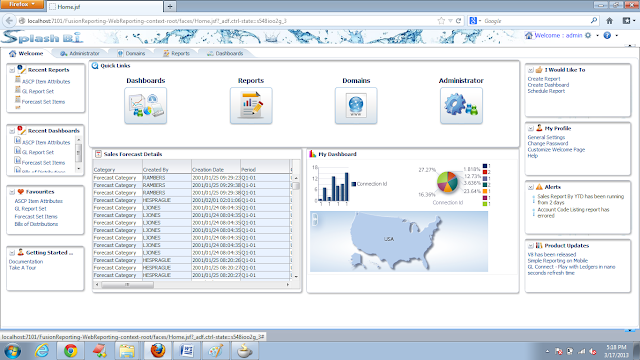
Take a look. Zoom in. Blow up the screen shot. Leave first impressions in the comments.
A few notes on the overall experience:
- ADF Essentials has not only performed better than advertised, it's changed our development team's thinking about how applications are developed.
- Thanks to ADF Essentials, we've built this product from scratch in under four months.
- The ADF Design Patterns, the ADF Rich Client User Interface Guidelines and the UX Direct tools were huge enablers in increasing productivity and cutting development cycle time.
Time for me to shut up now and let the product speak for itself. Here is a landing page screen shot from our latest iteration.

Take a look. Zoom in. Blow up the screen shot. Leave first impressions in the comments.
Friday, February 08, 2013
It's A Funny Market
Like everyone else involved in this business, I watch the job market. It's good to stay on top of things from both a hiring perspective and as a guy who sells my services. And it's a funny market right now…one of the oddest markets I've seen in quite a while.
My company has been in the market for sales people with some experience in selling Oracle E-Business and Oracle Business Intelligence. It's a tough slog, especially on the U.S. West Coast. Lots of competition for sales people.
On the other hand, two of the best solution architects I know have been looking for months with no success. Ditto for people specializing in support or post-sale customer care. Serious talent and few opportunities.
Apps DBAs are holding their own, but there's not as much of a rush for their services these days. But traditional DBAs appear to be doing quite well. And applications developers, especially those using Fusion Middleware tools, seem to be finding a glut in the market place. The latter seems especially true for those who specialize in SOA, although the ADF developers are holding their own. And while mobile apps are a hot ticket with users, the rates and salaries for mobile developers are typically at the lower end of the pay scale.
Functional folks: good market for folks with EBS upgrades, but a bit sparse for PeopleSoft, JD Edwards, and Fusion Applications. I suspect the EBS market will also shrivel a bit as customers finish off the move from 11i to R12.1.x later this year.
Lots of Hyperion opportunities, but the Essbase market itself seems a bit dry...weird.
In short, it's a highly segmented job market in the Oracle space at this particular moment. Some areas are up, while others are down. As Oracle continues their evolution from a database company into a "complete stack" technology company, it's definitely causing ripples in the Oracle-related job market that we've not really seen before. We're on uncharted ground…which makes it a funny market.
My company has been in the market for sales people with some experience in selling Oracle E-Business and Oracle Business Intelligence. It's a tough slog, especially on the U.S. West Coast. Lots of competition for sales people.
On the other hand, two of the best solution architects I know have been looking for months with no success. Ditto for people specializing in support or post-sale customer care. Serious talent and few opportunities.
Apps DBAs are holding their own, but there's not as much of a rush for their services these days. But traditional DBAs appear to be doing quite well. And applications developers, especially those using Fusion Middleware tools, seem to be finding a glut in the market place. The latter seems especially true for those who specialize in SOA, although the ADF developers are holding their own. And while mobile apps are a hot ticket with users, the rates and salaries for mobile developers are typically at the lower end of the pay scale.
Functional folks: good market for folks with EBS upgrades, but a bit sparse for PeopleSoft, JD Edwards, and Fusion Applications. I suspect the EBS market will also shrivel a bit as customers finish off the move from 11i to R12.1.x later this year.
Lots of Hyperion opportunities, but the Essbase market itself seems a bit dry...weird.
In short, it's a highly segmented job market in the Oracle space at this particular moment. Some areas are up, while others are down. As Oracle continues their evolution from a database company into a "complete stack" technology company, it's definitely causing ripples in the Oracle-related job market that we've not really seen before. We're on uncharted ground…which makes it a funny market.
Friday, January 11, 2013
ADF Essentials - How Did He Do That?
Ho, ho, ho It's magic you know
Never believe, it's not so
It's magic, you know
Never believe, it's not so
- From Pilot's "Ho Ho It's Magic"
I recently wrote about running ADF Essentials on an Apache Tomcat server. After that article, several of you asked me to write about here I did it…so here you go.
First, know that it's not magic...I just like ELO's cover of the song above and have always wanted an excuse to use it. In fact, it's really pretty simple. Installing some ADF runtime libraries, being sure to include some files to support a JSF implementation (Tomcat is not JSF-enabled out of the box), and some simple configuration. Heck, if I can do it, you can do it.
Second, none of this is my original work. As I mentioned in the original post, I followed the roadmap laid out by Raphael Rodrigues. Since then, I've also done it on Glassfish by following Shay Shmeltzer's directions (I also use Shay's Glassfish extension for JDeveloper) and on JBoss. Works like a charm across the board.
So, let's get started with Tomcat…
Files You'll Need
You'll need to download the following files:
Apache Tomcat 7
Oracle ADF Essentials 11.1.2.3
Oracle ADF Faces Components Demo 11.1.2.3
jsf-api.jar
jsf-impl.jar
glassfish.jstl_1.2.0.1.jar
Steps For A Local Installation and Configuration
1. Extract tomcat 7
2. Unzip the ADF Essentials zip file inside the %TOMCAT_HOME%\lib
3. Put the rcf-dvt-demo.war file inside the %TOMCAT_HOME%\webapps
4. Open the file %TOMCAT_HOME%\bin\catalina.bat (or .sh if you’re in a linux environment) and add in the end of the line ‘set JAVA_OPTS=%JAVA_OPTS% %LOGGING_CONFIG%’ this -Xms1024m -Xmx1024m. Failure to do this step may result in an OutOfMemory error at startup
5. Here's the toughest part of the whole deal. Tomcat does not come with jsf jar’s, so you have to put there. In my case, I went to my local Oracle Jdeveloper installation and grabbed the required files:
- jsf-api.jar
- jsf-impl.jar
- glassfish.jstl_1.2.0.1.jar
Put these files into %TOMCAT_HOME%\lib
6. Start tomcat in %TOMCAT_HOME%\bin\startup.bat
If everything is fine, you will be able to open your favorite browser and type http://localhost:8080/rcf-dvt-demo/faces/index.jspx
So, that's how I got it done. Try it yourself…have a little fun and let me know in the comments how it goes.
Never believe, it's not so
It's magic, you know
Never believe, it's not so
- From Pilot's "Ho Ho It's Magic"
I recently wrote about running ADF Essentials on an Apache Tomcat server. After that article, several of you asked me to write about here I did it…so here you go.
First, know that it's not magic...I just like ELO's cover of the song above and have always wanted an excuse to use it. In fact, it's really pretty simple. Installing some ADF runtime libraries, being sure to include some files to support a JSF implementation (Tomcat is not JSF-enabled out of the box), and some simple configuration. Heck, if I can do it, you can do it.
Second, none of this is my original work. As I mentioned in the original post, I followed the roadmap laid out by Raphael Rodrigues. Since then, I've also done it on Glassfish by following Shay Shmeltzer's directions (I also use Shay's Glassfish extension for JDeveloper) and on JBoss. Works like a charm across the board.
So, let's get started with Tomcat…
Files You'll Need
You'll need to download the following files:
Apache Tomcat 7
Oracle ADF Essentials 11.1.2.3
Oracle ADF Faces Components Demo 11.1.2.3
jsf-api.jar
jsf-impl.jar
glassfish.jstl_1.2.0.1.jar
Steps For A Local Installation and Configuration
1. Extract tomcat 7
2. Unzip the ADF Essentials zip file inside the %TOMCAT_HOME%\lib
3. Put the rcf-dvt-demo.war file inside the %TOMCAT_HOME%\webapps
4. Open the file %TOMCAT_HOME%\bin\catalina.bat (or .sh if you’re in a linux environment) and add in the end of the line ‘set JAVA_OPTS=%JAVA_OPTS% %LOGGING_CONFIG%’ this -Xms1024m -Xmx1024m. Failure to do this step may result in an OutOfMemory error at startup
5. Here's the toughest part of the whole deal. Tomcat does not come with jsf jar’s, so you have to put there. In my case, I went to my local Oracle Jdeveloper installation and grabbed the required files:
- jsf-api.jar
- jsf-impl.jar
- glassfish.jstl_1.2.0.1.jar
Put these files into %TOMCAT_HOME%\lib
6. Start tomcat in %TOMCAT_HOME%\bin\startup.bat
If everything is fine, you will be able to open your favorite browser and type http://localhost:8080/rcf-dvt-demo/faces/index.jspx
So, that's how I got it done. Try it yourself…have a little fun and let me know in the comments how it goes.
Subscribe to:
Posts (Atom)